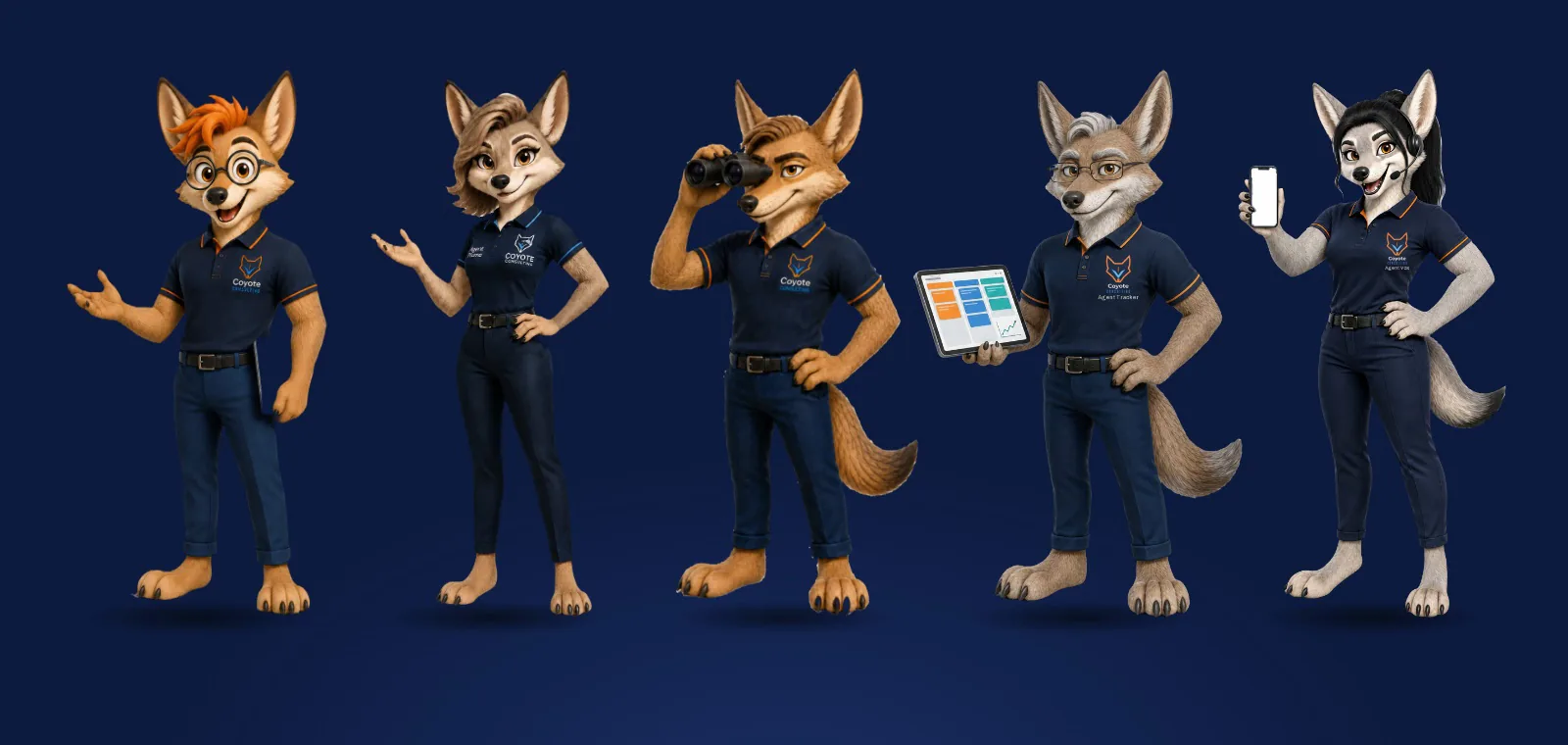






Three agents in production. One cockpit. No magic button.
Major orchestrates, Plume writes, Scout watches. They share the same state, hand work over without being called, and stop in front of you for approval. Configured for your company, not rented off the shelf.
MajorRight hand
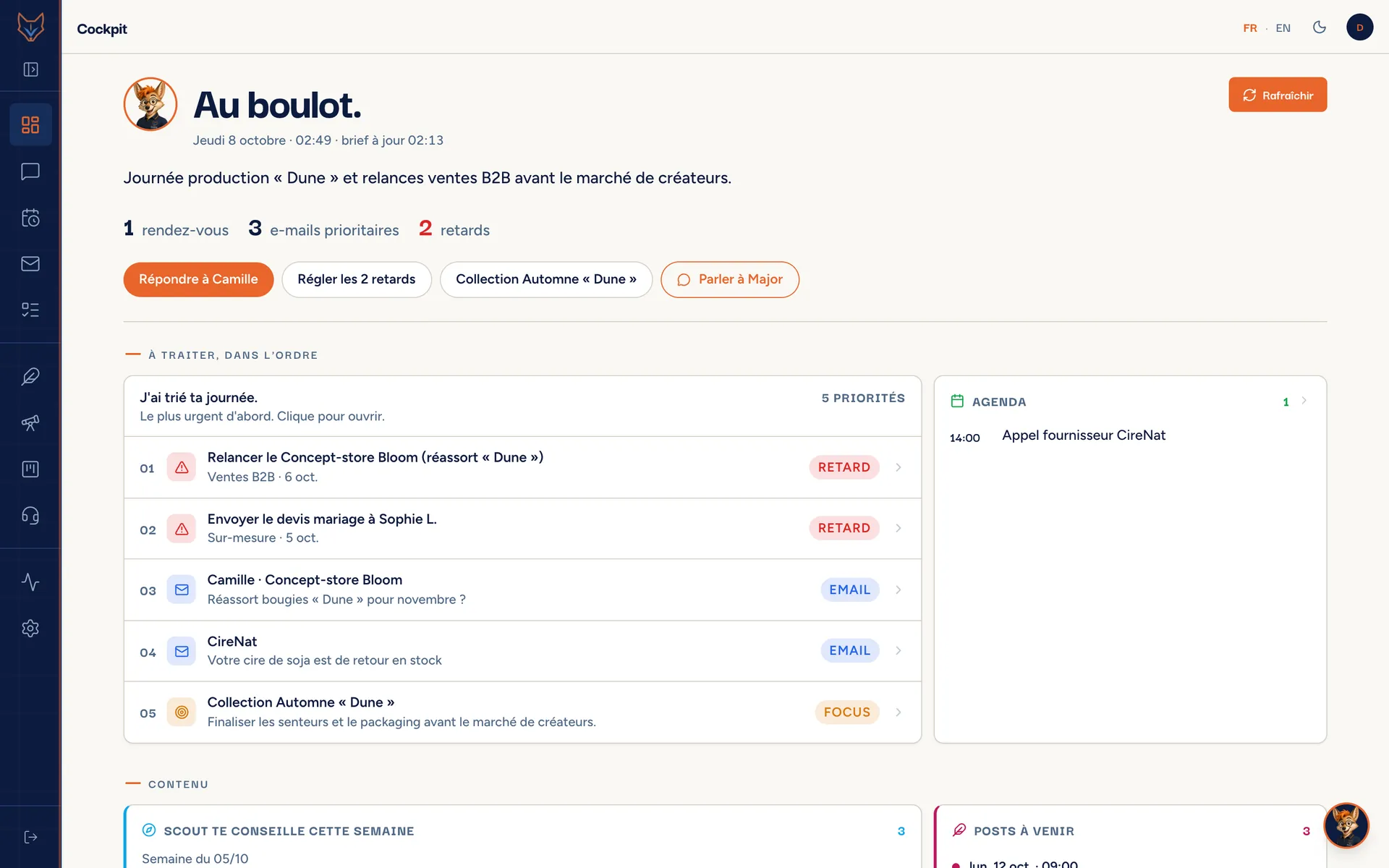
The cockpit. It aggregates what the others produce, shows it to you in one place, and routes your decisions to the right agent. It does not do the specialists' work: it saves you from hunting for it across eight tools.
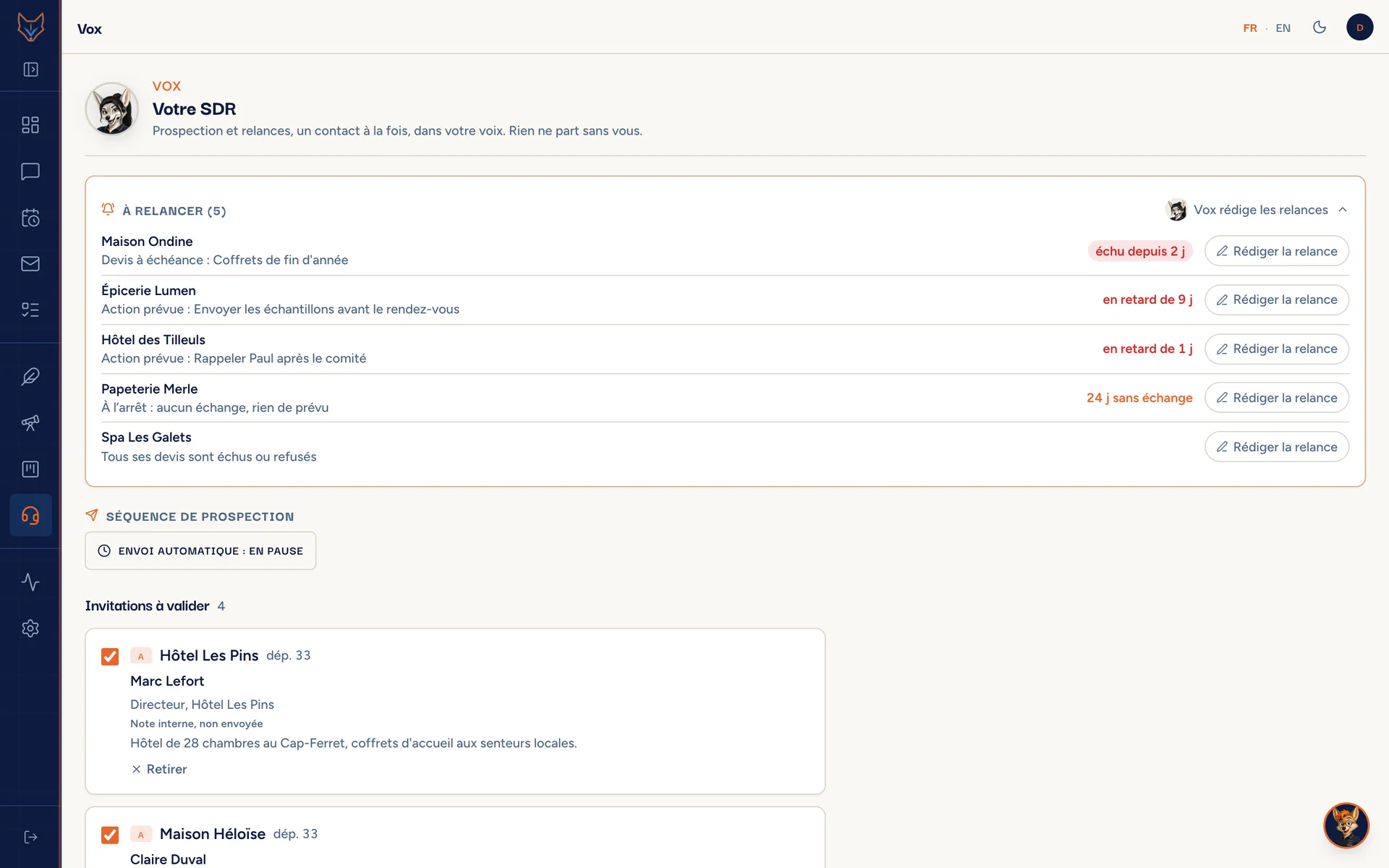
- Daily briefCalendar, priority emails, tasks and projects for the day, on one page.
- Orchestrator chatOne request in plain language, routed to the agent that can handle it.
- EmailReads the inbox, drafts the reply, you edit and send.
- Tasks & calendarTwo-way sync with the tools you already use.
- ActivityA timestamped, auditable log of everything the pack did.
- Control roomThe health of every agent, and what failed.
The line we don't cross: Major aggregates and routes. It never replaces the specialist agent. A cockpit that starts doing everything becomes yet another tool.
PlumeContent manager
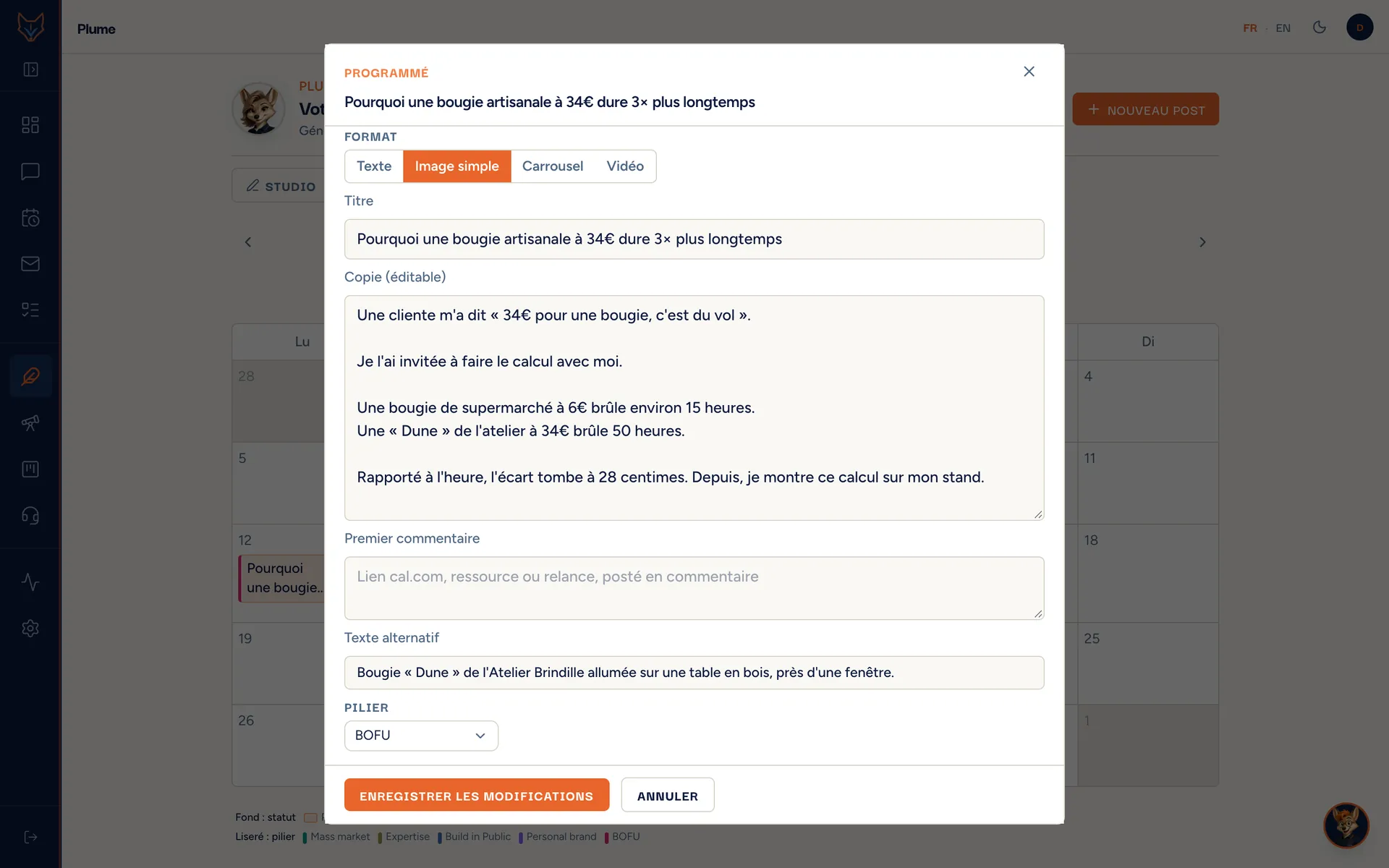
It produces your content every week, in your voice. Not a prompt wired to a model: a system calibrated on your past posts, your content pillars and your actual publishing slots.
- Grounded ideationAngles come from your own content and topics, not a generic list.
- Written in your voiceYour existing posts are the reference for every generation.
- Brand visualsGenerated illustration, then headline and logo composited from templates. The logo is never AI-redrawn.
- CarouselsNative document format, the one that actually swipes in the feed.
- CalendarScheduling, drag-and-drop rescheduling, one post per day maximum.
- Approval before publishingNothing goes out without your sign-off.
Its boundary: Plume speaks in public, to many. One-to-one private messages belong to another agent. An agent that spills outside its domain is a design flaw.
ScoutMarket intel
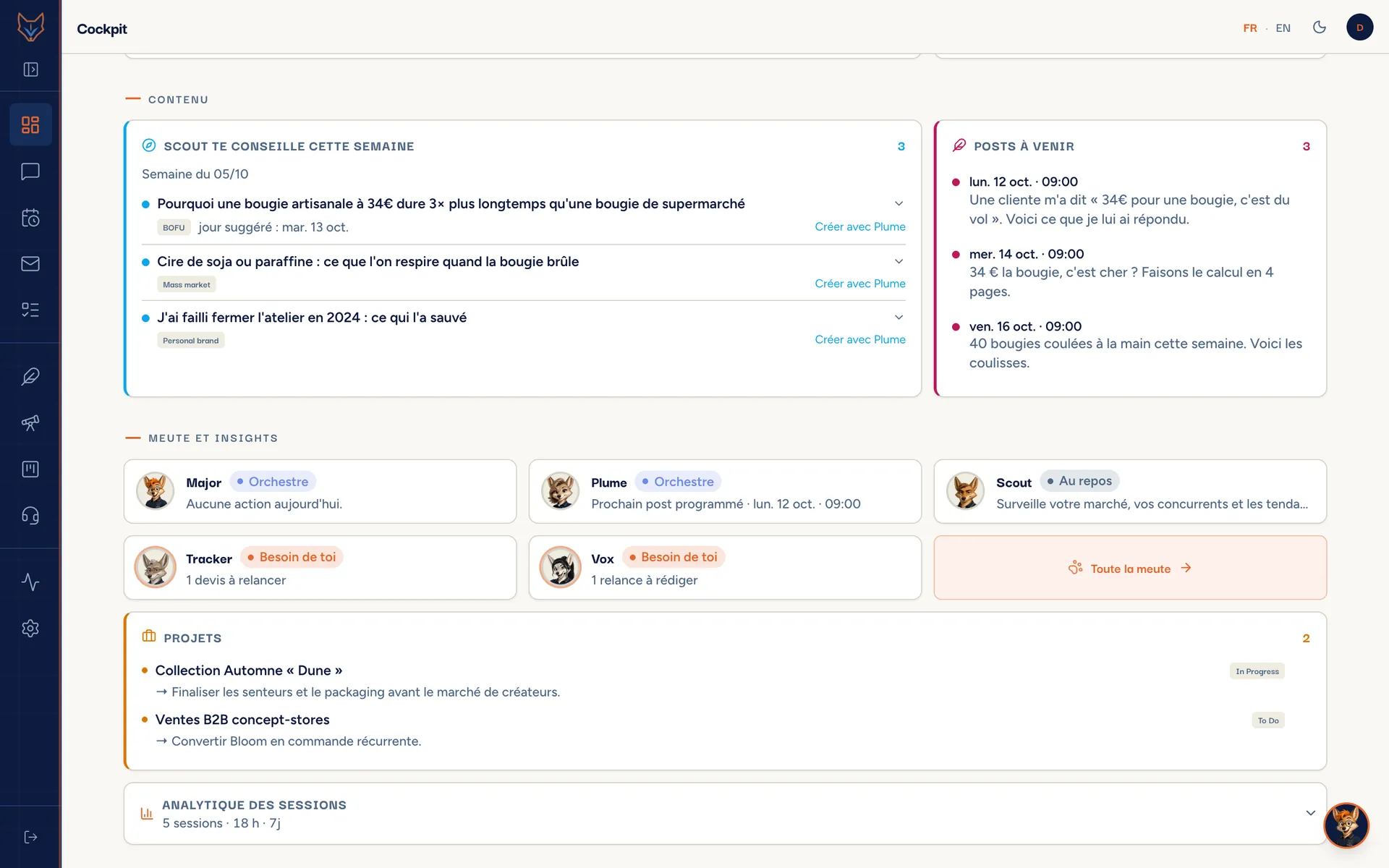
The eye. It reads what is being said in your market continuously, keeps the signal, drops the noise, and delivers a three-angle brief every Monday morning.
- Continuous watchNewsletters, feeds and posts ingested into one searchable corpus.
- Weekly briefThree angles, each tied to an under-covered pillar of your editorial line.
- Every angle is sourcedAn angle without a real source is not produced at all.
- Hands offIt analyses and recommends. It never publishes, never contacts anyone.
Why this matters: a market-watch agent that invents a source is worse than no watch at all. Ours fails loudly rather than shipping three angles with one made up.
They don't call each other. They share the same worktop.
Most "AI agent teams" are a chain of calls: one link fails and everything stops. Here each agent writes to a shared state and reads what concerns it. An agent that goes down slows the pack, it doesn't break it.
-
1
Scout spots it
A market signal is worth speaking about. Scout analyses it, ties it to an under-covered pillar and frames the angle.
-
2
Plume writes it
It picks up the angle, writes in your voice, produces the brand visual and drops the post on a free slot.
-
3
Major brings it to you
The cockpit shows you what is ready. You approve, adjust or reject. Nothing publishes without that step.
This pack runs in production on our own operations today. That is what lets us deploy it at your company without using you as the test track.
We build in the open.
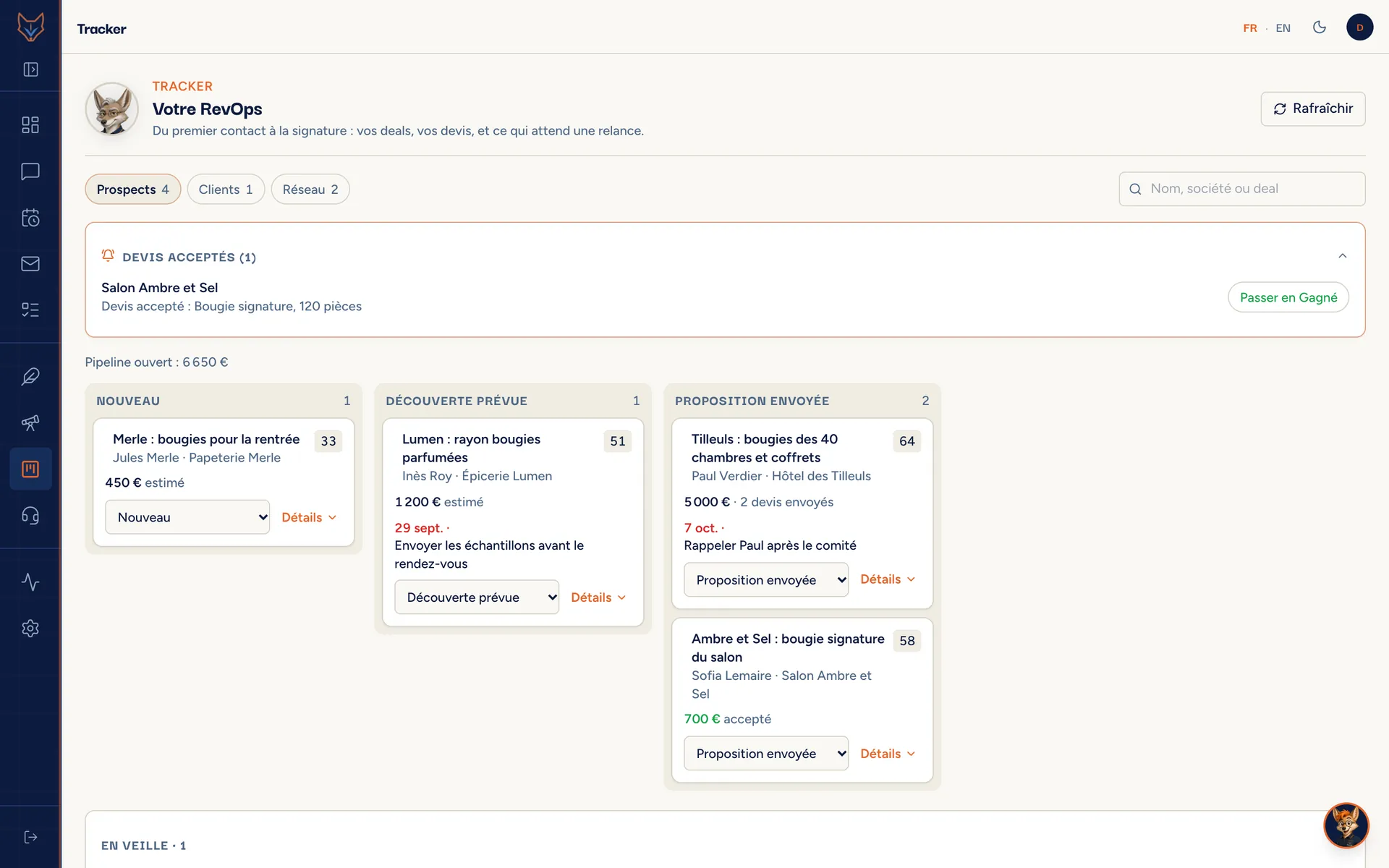
Eleven slides published on LinkedIn on 24 July 2026: how Plume was built, real cockpit screenshots, and the failures we left in. The slides are in French, in the voice of the original post.


Published 24 July 2026 on LinkedIn · 11 slides out of 12, the last one was a call to action pointing here.
A Coyote agent is not an off-the-shelf product.
No two clients share a voice, a process or a stack. A generic agent produces generic content, which is exactly what your prospects spot at first glance.
Calibrated on you
Voice, pillars, domain vocabulary, formats. The system learns from your existing content, not from a generic corpus.
Wired into your stack
Your current tools, not ours. We connect what you already use instead of making you migrate.
It belongs to you
Infrastructure, runbooks and code handed over. No black box, no vendor lock-in.
Next in the pack
What people ask about the agents
Do these agents actually exist, or is this a mockup?
How long does one take to install?
What about my data?
What stays human?
Am I dependent on you afterwards?
We'll show you the pack running.
Thirty minutes, your context, the cockpit live. You will see what is genuinely automatable at your company, and what is not.